
India's Chemical Industry Accelerates Toward a Trillion-Dollar Future
India's chemical industry is transitioning from cyclical weakness toward sustained expansion, positioning the country as a global manufacturing hub. The sector currently stands at US$220-250 billion and is projected to reach approximately US$300 billion by 2030, with long-term ambitions of approaching US$1 trillion by 2040.
India is currently the 6th largest chemical producer globally and 3rd largest in Asia, contributing nearly 7% of GDP. In FY26, chemical and allied product exports reached US$18.6 billion, with India holding a 16-18% global share of dye and dye-intermediate production. The specialty chemicals segment alone has exceeded US$60 billion.
The Union Budget 2026-27 introduced a new Chemical Parks Scheme with a Rs 600 crore allocation to help states establish dedicated, cluster-based, plug-and-play manufacturing ecosystems through a challenge-based selection process. Petroleum, Chemicals and Petrochemicals Investment Region (PCPIR) projects are expected to generate up to Rs 20 lakh crore in economic activity by 2035. The Budget also allocated Rs 7,280 crore for a Rare Earth Permanent Magnets Scheme and Rs 20,000 crore for carbon capture, utilisation and storage (CCUS) initiatives.
Industry investment sentiment reflects this momentum: companies are planning capacity expansions of 50% and revenue growth exceeding 35% within five years, according to sector reporting. However, challenges remain — Chinese overcapacity in commodity chemicals, feedstock security concerns, and logistics infrastructure constraints continue to weigh on the pace of expansion.
For Indian chemical buyers and suppliers, the policy push toward dedicated chemical parks and PCPIR zones signals a multi-year infrastructure buildout that should gradually improve availability, logistics reliability, and cost competitiveness across the domestic supply chain.
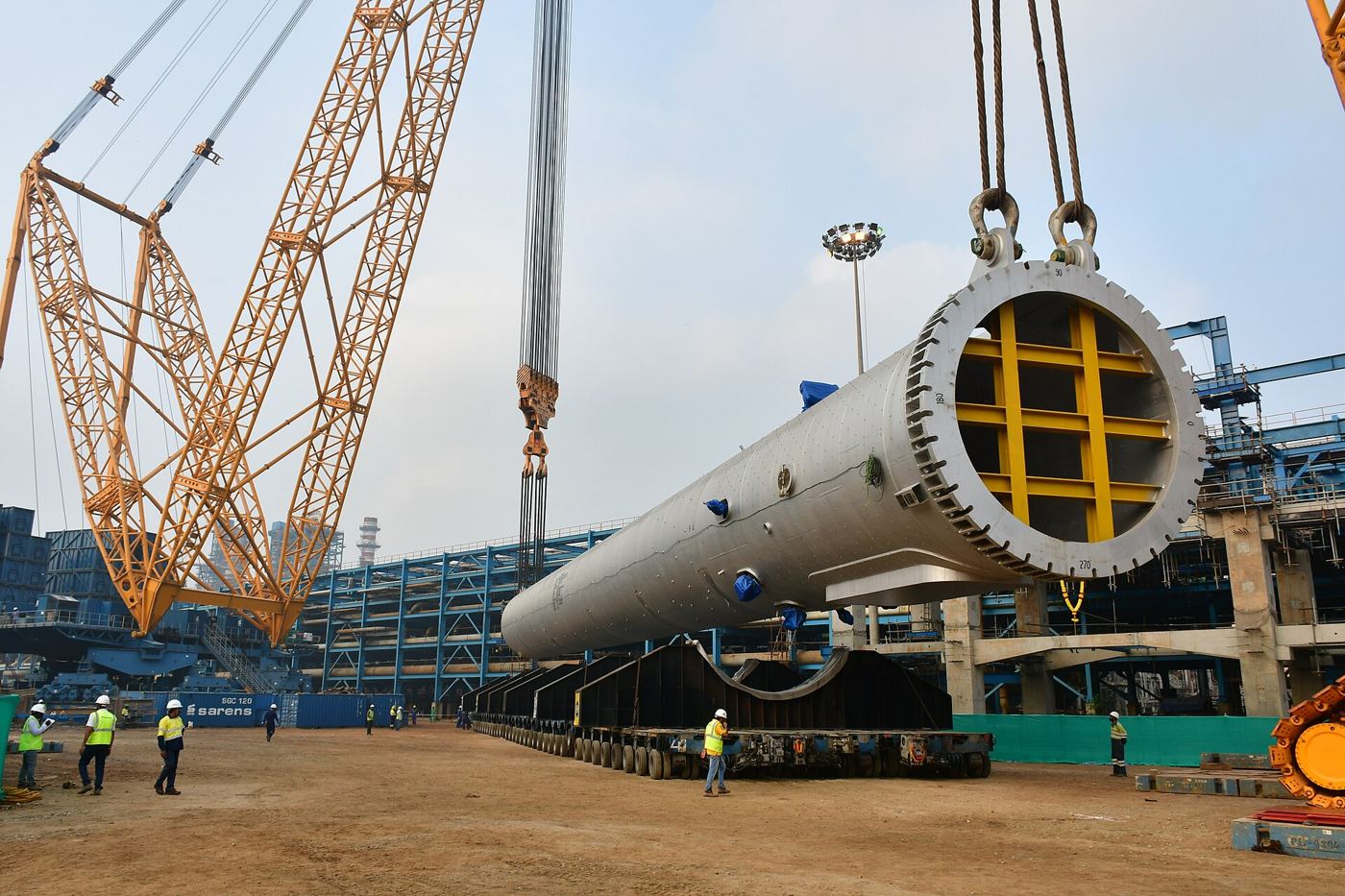
Photo: reactor erection at the Vizag refinery modernisation project. Rajiv Nair (EIL), CC BY-SA 4.0, via Wikimedia Commons.